Trend Watch

The trends worth trying (and how to wear them)

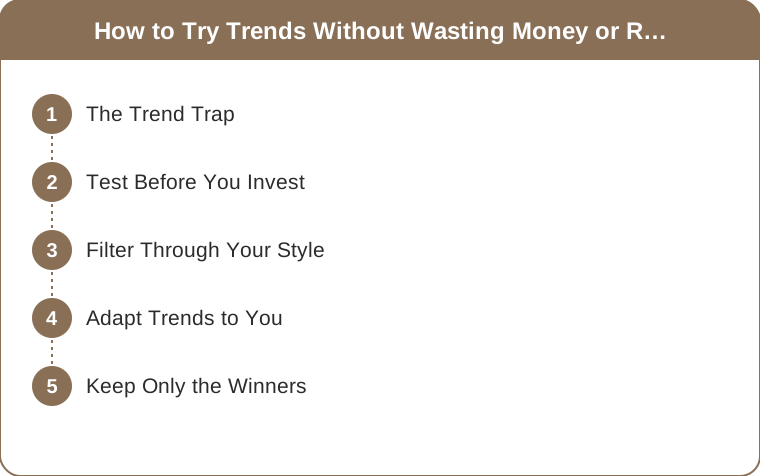
How to Try Trends Without Wasting Money or Regret

2026-07-13

Quick Answer: Try trends cheaply before you commit. Buy the first version secondhand or under $30, wear it three times in the first two weeks, and only then decide whether to invest. Filter every trend through one question — does this work with at least three things I already own? — and you’ll skip roughly 80% of the purchases you’d have regretted.

There’s a specific kind of closet regret that only trends produce. It’s not that the piece was bad. It’s that you loved it for eleven days and then it became a hanger with a story.

The problem isn’t enthusiasm. Enthusiasm is the fun part. The problem is that enthusiasm without a filter costs a few hundred dollars a year and produces a wardrobe you don’t recognize.

Here’s the system for experimenting with trends without the wreckage — and the test in step two is the one that saves the most money.

How to Try Trends Without Wasting Money or Regret

At a glance

Why Do Trend Purchases Go Wrong?

Three failure modes account for nearly all of it.

You bought the trend, not the version of it that suits you. A silhouette that looks incredible on the person in the photo may be doing something specific for their proportions that it won’t do for yours.

You bought it in isolation. The piece is great and it doesn’t go with anything. Every time you consider wearing it, you’d need two other things you don’t own.

You bought it at peak. By the time a trend is everywhere, you’re paying the highest price for the shortest remaining runway.

Notice that “the trend was bad” isn’t on the list. Most regretted purchases are fine garments in the wrong closet.

Test Before You Invest

The single most effective rule: your first version of any trend should cost under $30, or come from a secondhand source.

This isn’t about being cheap. It’s about buying information. A $28 version tells you exactly as much about whether you’ll actually wear something as a $280 version does — and if the answer is no, you’re out $28.

Where to run the test: secondhand apps, thrift stores, the sale section of fast-fashion retailers, or borrowing from a friend who bought it first.

Then wear it three times in two weeks. This is the real test, and it’s non-negotiable. A piece that survives three genuine outings — to actual places, not just around your apartment — has earned the right to be upgraded. A piece you keep meaning to wear has already told you the answer.

If it passes, buy the good version. You now know it works, and you’ll wear it for years instead of a season.

How to Try Trends Without Wasting Money or Regret

Filter Through Your Existing Style

Before the cheap test, run the free one.

The rule of three: does this piece work with at least three things already hanging in your closet? Not theoretically — name them. If you can’t name three, the true cost of this purchase isn’t the price tag, it’s the price tag plus two more garments.

The five-year check: look at what you’ve actually worn most over the last five years. Most people have a consistent shape and palette they return to regardless of what’s current. A trend that runs against that grain rarely sticks, no matter how much you like it on other people.

The occasion audit: where would you wear it? If the honest answer is “an event I don’t currently have,” that’s a costume, not a wardrobe piece.

Not every trend is for you, and selectivity is genuinely the whole skill here.

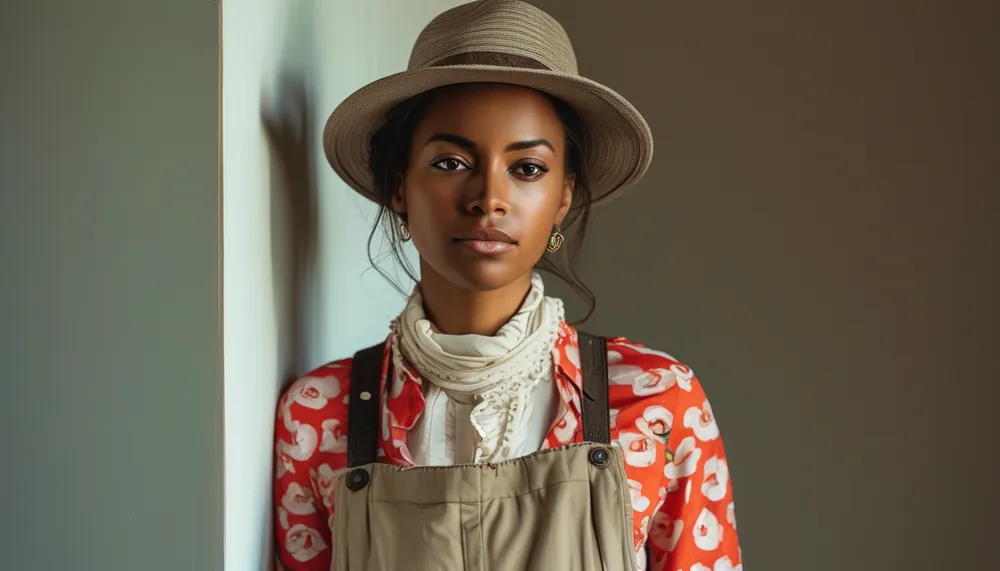
The stylish people you’re copying are almost never wearing trends as shown. They’re extracting the idea and translating it.

Take the essence — the proportion, the color, the detail — and apply it in the version that flatters you. If oversized blazers are everywhere but drown your frame, you take the shoulder line and go one size up instead of three. If a bold color is having a moment but not in your palette, you take it in an accessory rather than a coat.

Trend-adjacent beats trend-exact. A slightly wider trouser reads current for years. An extremely wide trouser reads as a specific season forever.

This is also how you make trends last past their moment. A piece that’s 70% trend and 30% your own style survives the trend cycle, because it was never entirely dependent on it.

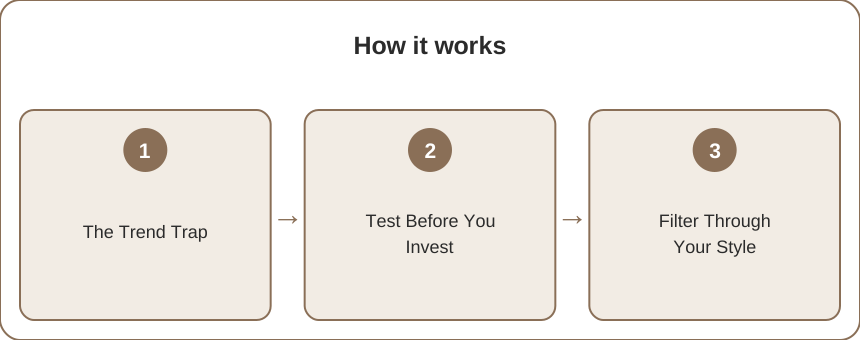
How it works

Keep Only the Winners

At the end of each season, do a short review of everything you bought as an experiment.

The winners — worn five or more times, still exciting — get upgraded or kept permanently. The maybes get one more season on probation. The rest get sold or donated immediately, while they still have resale value and while someone else can still get a season out of them.

That last point matters financially. A trend piece sold at the end of its first season recovers meaningfully more than one sold three years later. Curating ruthlessly isn’t just about closet space; it’s about not letting money sit in a garment you’ve stopped wearing.

Keep a running note on your phone with what you tried and what happened. After two seasons you’ll have a startlingly clear picture of which categories of trend you actually stick with — and you’ll stop buying the ones you don’t.

What Nobody Tells You About Trend Cycles

Micro-trends aren’t worth the test. If a trend appeared six weeks ago and is already everywhere, it will be gone before your cheap test finishes. Skip it entirely.

Trends return on roughly a 20-year cycle. If you’re old enough to have worn something the first time, you’re allowed to sit this one out. It’ll be back.

The accessory version is almost always the better bet. A trend in a bag, a shoe, a belt, or a scarf costs less, ages better, and doesn’t have fit risk.

Buying at the end of a trend’s run is the cheapest way to own it. If you genuinely love something that’s on its way out, wait for the clearance and buy it as a permanent piece rather than a current one.

The trends worth investing in early are the ones that are really just good design returning. A well-cut straight-leg trouser, a good loafer, a strong shoulder — these come back as “trends” but function as classics.

Mini FAQ

How do you know if a trend is worth buying?

Run three checks: it works with at least three things you own, you can name a specific occasion for it, and it’s consistent with the shapes you’ve worn for the past five years. If it passes all three, test it cheaply first. If it fails any of them, skip it.

Is it cheaper to buy trendy clothes secondhand?

Almost always, and secondhand also solves the timing problem — trend pieces flood resale markets about six months after peak, which is exactly when you can judge whether you actually want one. You’ll pay 40–70% less for something that’s often been worn twice.

Two or three is plenty. Trying more means you can’t give any of them the three-wear test properly, and the whole point is generating real information about what you’ll wear rather than accumulating options.

TL;DR:

  • First version of any trend: under $30 or secondhand. Buy information, not the garment.
  • Wear it three times in two weeks. Passing that test earns the upgrade.
  • Rule of three — if it doesn’t work with three things you own, the real cost is higher than the price.
  • Adapt the trend rather than copying it. Trend-adjacent lasts years; trend-exact lasts a season.
  • Sell the losers immediately, while they still have resale value.

Trends can be fun without being wasteful. Test cheap, filter hard, adapt to yourself, and keep only the winners — you’ll stay current without the regret or the receipts.

Keep Reading

This article is for general styling and informational purposes only. Trends, sizing, availability and pricing may vary by brand and season.

trendssmart shoppingstyling

← All articles