Micro-Trends vs. Macro Shifts: What Deserves Your Attention
Quick Answer: Micro-trends are items — a bag shape, a color of the month, a styling gimmick — that live for weeks inside one algorithm neighborhood. Macro shifts are directions, like the slim-to-wide trouser migration, that play out over years across every price tier. Ask one question to tell them apart: is this a new shape or a new decoration? Shapes deserve wardrobe decisions. Decorations deserve pocket change at most.
Your feed showed you the same bag charm 40 times last month. It also, much more quietly, spent three years widening every trouser leg in existence without ever making a single viral post about it.
Those two things are not the same phenomenon, and treating them the same way is how closets fill up with regret.

What’s the difference between a micro-trend and a macro shift?
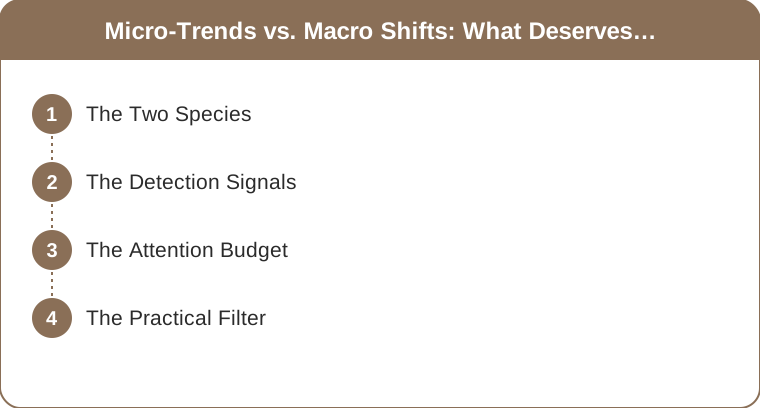
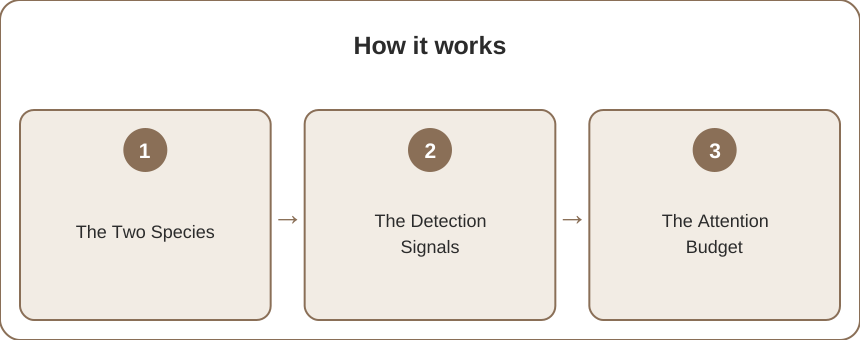
Micro-trends are items. The specific bag shape, the color-of-the-month, the styling gimmick. They’re born on feeds, peak in about 6 to 12 weeks, and are dead — actively embarrassing, even — within a season or two.
Macro shifts are directions. The slim-to-wide trouser migration, the tailoring revival, the comfort-formality merger. They run 5 to 10 years and every brand eventually obeys them, including the ones that resisted longest.
The lifespans differ by roughly two orders of magnitude. A micro-trend is measured in weeks. A macro shift is measured in years. Spending equal attention on both is like giving the same weight to a weather forecast and a climate report.
How can you tell which one you’re looking at?
Three tests, and they’re fast.
The breadth test. A macro shift shows up across price tiers and aesthetics at the same time — fast fashion, mid-market, luxury, minimalist, maximalist, all of it. A micro-trend lives in exactly one algorithm neighborhood and gets pushed to you because you’ve engaged with that neighborhood before.
The silhouette test. Macro shifts change shapes. Micro-trends change decorations. A trouser leg going from 14 inches to 22 inches at the hem is a shape change. A charm hanging off a bag is a decoration.
The durability question. Ask yourself: will this read normal in three years? The wide-leg answered yes — and did. The charm-cluster bag answered no — and did.
If you only remember one, remember the silhouette test. Shape versus decoration catches about 90% of cases with no research required.

5 Mistakes Everyone Makes With Trends
- Buying the micro-trend at macro-trend prices. If the item’s shelf life is one season, its budget is one season’s worth. Spending $200 on a decoration that expires in June is the most common trend error there is.
- Waiting out the macro shift. People treat the wide-leg migration like a fad to sit out. It isn’t. By the time you cave, the shape has moved on again and you’re buying the tail end.
- Mistaking saturation for peak. When something is everywhere on your feed, it’s peaking in your neighborhood — not necessarily in the broader market. The breadth test is the correction.
- Adopting a macro shift in one giant purchase. Buying six pairs of wide-leg trousers in one afternoon is a bet on a single interpretation. Bridge pieces first, then expand.
- Not counting the styling cost. A new silhouette often needs new proportions on top and new shoes underneath. The trousers were $80 and the outfit was $300. The third mistake catches even experienced shoppers, but this one catches everyone.
Where should your attention actually go?
Macro shifts get wardrobe responses. When a shift reaches your daily uniform — and it will, eventually, because retail stops making the old shape — respond gradually. Buy one bridge piece that works with what you already own, wear it for a month, then decide whether to expand.
Micro-trends get the accent slot’s pocket change. Treat them as an audition tier: fun, cheap, pre-mourned. If you’d be genuinely annoyed to donate it in eight months, it’s priced wrong.
And feed hygiene is a styling tool. The algorithm profits from micro-trend anxiety — it’s engagement fuel. Unfollowing three accounts that make you feel behind is a legitimate wardrobe intervention, and it costs nothing.
What does this look like in practice?
Say the feed is pushing a specific ballet-flat colorway. Shape or decoration? Decoration. Budget: accent-slot pocket change, or skip.
Say every brand across every tier is quietly raising rises and widening legs. Shape or decoration? Shape, and the breadth test confirms it. Response: one bridge piece — say, a pair of high waist wide leg yoga pants you’ll actually wear weekly — worn until you know whether the proportion suits you, then expand or stop.
That’s the entire system. One question, two budgets.
FAQ
How long does a micro-trend actually last?
Typically 6 to 12 weeks at peak visibility, with a long tail of discounted stock afterward. If you’re seeing an item at 60% off across multiple retailers, the trend already ended — you’re shopping the tail.
Should I ever buy into a micro-trend?
Sure, if it’s genuinely fun and genuinely cheap. The rule isn’t abstinence, it’s proportion: micro-trends belong in the accessory and accent budget, not the wardrobe-foundation budget.
How do I know when a macro shift has reached my uniform?
When you go to replace a basic and the old shape is hard to find at your usual retailers. That’s the market telling you the migration is done, and it’s the natural moment to adopt rather than resist.
TL;DR:
- Two species: micro-trends are items (weeks), macro shifts are directions (years).
- One question sorts them: is this a new shape or a new decoration?
- Three tests: breadth across price tiers, silhouette versus decoration, and “normal in three years?”
- Shapes get wardrobe responses — adopt gradually via bridge pieces.
- Decorations get pocket change, pre-mourned. And unfollowing is free.
Keep Reading
This article is for general styling and informational purposes only. Trends, sizing, availability and pricing may vary by brand and season.