Reading the Trend Tea Leaves: How to Spot What's Coming Before It's Everywhere
Trends telegraph their arrival — the runway-to-street pipeline, the early-adopter signals, the color-drift patterns — and reading them yourself means buying before the markup and wearing before the saturation. The trend-spotting guide.

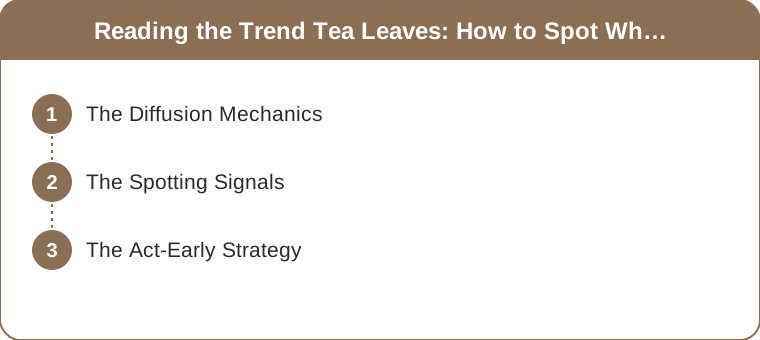
The Diffusion Mechanics
How trends travel: the pipeline map (the runway-and-culture origins flowing through early adopters to mass — the eighteen-month classic timeline compressing in the social era per the trend-lifecycle logic), the micro-versus-macro sorting (the six-week micro-trends versus the multi-year shifts from the micro-macro logic — the energy spent on macros; the wide-leg era being a macro, the charm-bag being a micro), the saturation signals (the trend at the supermarket being the peak-passing marker — the fast-fashion-everywhere moment preceding the fade), and the cycle awareness (the twenty-year revival rhythm — the y2k-then-2010s pattern; the next revival being predictable arithmetic per the cycle logic).

The Spotting Signals
Reading early: the street-over-runway watching (the fashion-city street style being the practical forecast — the what-cool-people-actually-wear signal per the street logic), the recurrence rule (the same new element seen THREE times in credible places being a signal — the once being noise, the pattern being data per the pattern logic), the adjacent-industry tells (the interiors-and-design colors migrating to fashion — the culture-wide palette shifts; the film-and-music influences), the fabric-and-silhouette drift (the trends being often proportion shifts — the rise moving, the shoulder changing; the silhouette-drift being the deepest signal per the silhouette logic), the vintage-market thermometer (the secondhand prices rising on a category signaling revival — the thrift-rack early warning per the thrift logic), and the personal-taste alert (the your-eye-lingering-repeatedly being your OWN forecast — the trend-you-keep-noticing per the intuition logic).
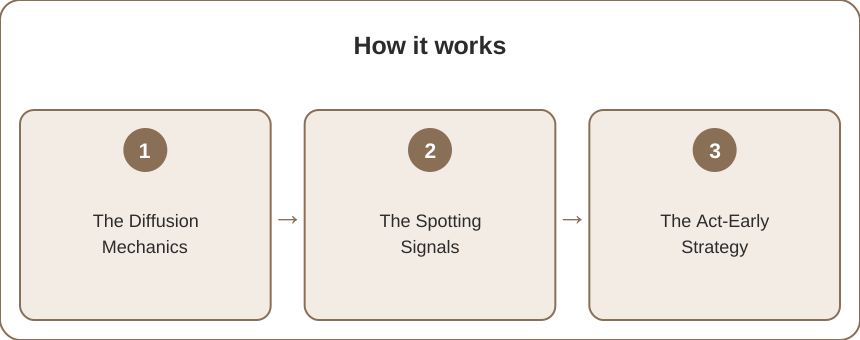
The Act-Early Strategy
Using the read: the early-buy advantages (the pre-saturation buying at normal prices — the best-versions available before the copies flood per the quality logic), the vintage-arbitrage move (the coming revival bought secondhand BEFORE the demand — the thrift racks holding the next trend at last-trend prices per the thrift logic), the dose-first entry (the spotted trend trialed small per the adaptation logic — the accessory-scale bet), the skip-with-confidence option (the trend seen coming AND declined — the forecast serving choice, not obligation per the choice logic), the wardrobe-planning application (the macro-shifts informing the capsule updates per the capsule logic — the silhouette-drift guiding the next investment), the fun framing (the trend-spotting as a style hobby — the fashion-watching sharpened per the hobby logic; the called-it satisfaction), and the closing frame (the tea leaves readable by anyone watching — the three-sighting rule, the vintage thermometer, the silhouette drift; the trend met early, cheaply and on your terms; the forecast, in-house). Three credible sightings, watch the silhouettes, buy the revival secondhand early: the trends, spotted before the crowd.
Trends telegraph: watch street style over runways, apply the three-credible-sightings rule, track silhouette drift (rises and shoulders moving is the deepest signal), and use the vintage-market thermometer — rising secondhand prices on a category forecast its revival. Act early: buy the best versions pre-saturation, arbitrage the coming revival at thrift prices, or skip with confidence; the forecast serves choice.
Keep Reading
This article is for general styling and informational purposes only. Trends, sizing, availability and pricing may vary by brand and season.